

Social Media is About Relationships. Not selling.
Every brand on earth is chasing the same three things: reach, followers, and virality. While that’s the scoreboard everyone is watching, a follower count is a receipt. It is not a relationship that leads to what matters, whether its sales, support, or belief. You can rack up receipts all day while the person on the other end forgets you exist.
Content consumption Chas hanged. Nobody scrolls "social media" anymore, they scroll Instagram at lunch, TikTok at midnight, and LinkedIn while pretending to work. Same person, three different moods, three different reasons to stop and look. If you chase connection instead of reach, the numbers on the scoreboard tends to grow.
Every platform's audience behaves differently, and every account they follow earned that follow for its own reason. So before you obsess over which platform to be on and how, answer the question: who are you, and what do you stand for? Nail that, then you can figure out which channel or channels to show up on and how to show up.
We put together a look at how each platform's audience is behaving right now in September 2026, not 2022's leftover wisdom. Grab it here.
You Don’t Win In The Room Without Earning It First
The room where it happens doesn't just open for anyone.
It's yours if you've done the work.
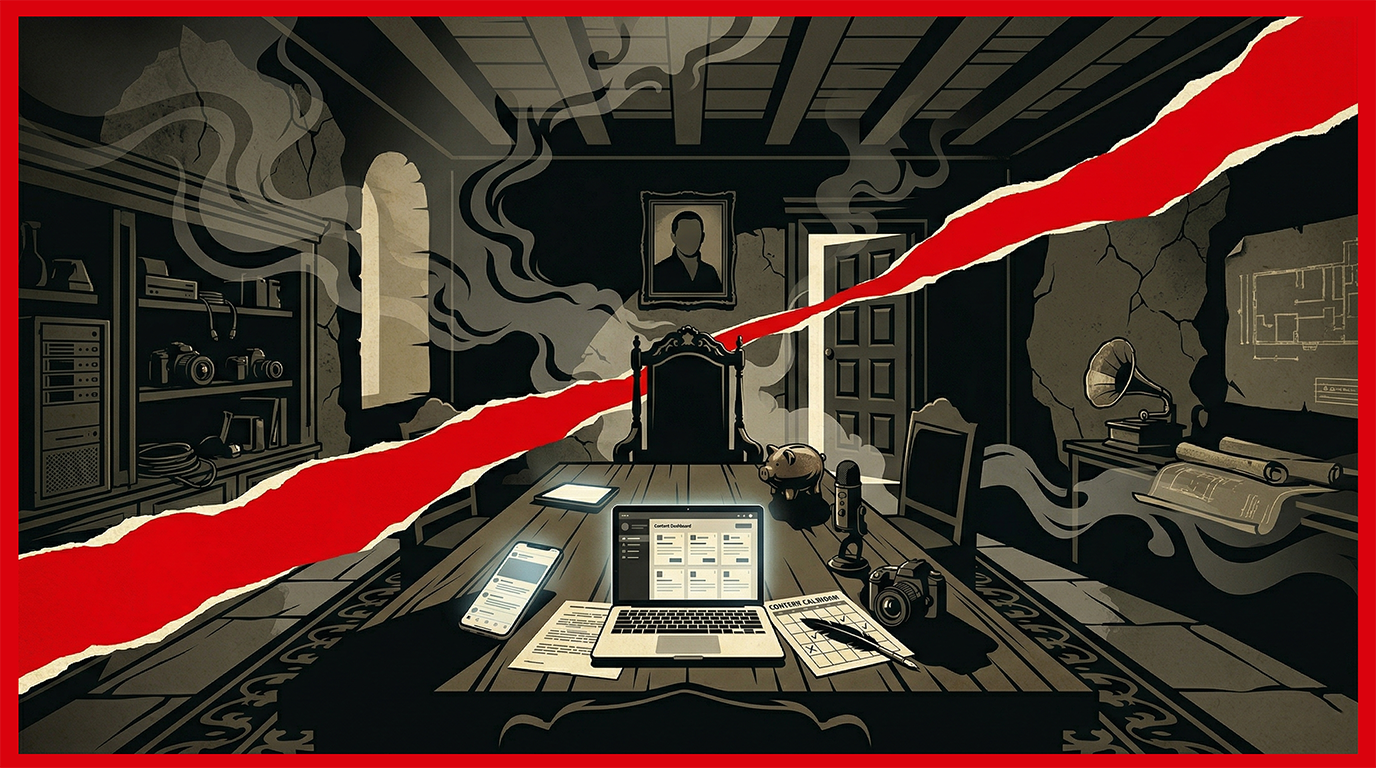
That means your brand is the impression people form of you beforehand — every post, point of view, and piece of content either sharpens or blurs it.
The room where it happens doesn't just open for anyone. It's yours if you've done the work.
That means your brand is the impression people form of you beforehand — every post, point of view, and piece of content either sharpens or blurs it.
Reputation is that brand impression time and time again. It's built in-between the big moments with daily deposits of content, like a piggy bank.
Growth follows both. Businesses that skip straight to growth tactics are borrowing against trust they haven't built yet. The proof is everywhere.
68% of businesses say brand consistency directly contributes to revenue growth of 10% or more. B2B buyers complete 70% of their decision before ever contacting a vendor. 81% of consumers say they need to trust a brand before they'll buy. Hell, you're making your decision about working with me as we speak.
By the time someone sits across from you, the decision is already made if not leaning one way or another.
David Plouffe just made this argument about political candidates in the New York Times. To win today, you need to operate like a full-time production studio churning out valuable content, not AI slop, that builds trust through authenticity. Here's the kicker — he's not just talking about politicians.
He's talking about the leaders who go dark for periods at a time, the brands who only show up to sell, and the executives who haven't sent a message to their staff in ages. Every touchpoint is a token deposited into the trust piggy bank — a post, video, interview, op-ed, whatever.
Real, meaningful trust gets built in person through conversation and follow-through. Content primes the moment. It can't replace it.
Brand builds the belief. Reputation protects it. Growth is what happens when both are working.
Show up before you need to. Then get in the room and finish what you started.
FORWARD OR NOTHING
BIG IDEAS ARE DEAD. Long Live Culture & Courage.
For most of the last century, the company with the best idea won.
Insights were competitive advantage and you protected it, codified it, sometimes trademarked it, resourced it, and grew. The gap between what you knew and what they knew was your moat. Ideas were scarce. Execution was the commodity.
AI has flipped that equation completely.
Now any organization or individual with a large language model can generate ideas by the bushel before lunch. Take your pick, AI has it: Competitive analysis, product concepts, go-to-market frameworks, campaign strategies, content, and code. In the time it used to take a leadership team to align on a problem statement, AI can generate a hundred plausible solutions and rank them by feasibility.
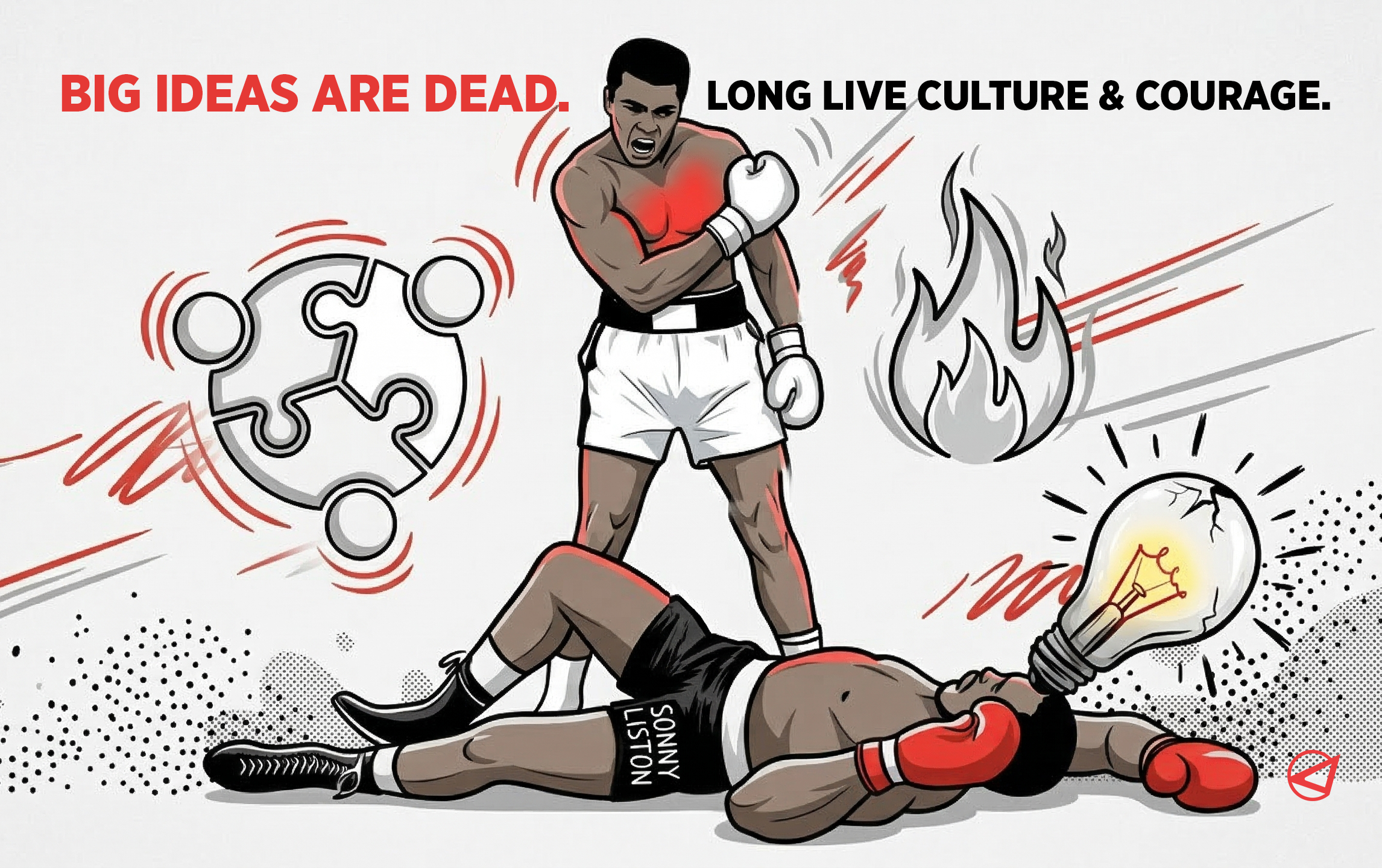
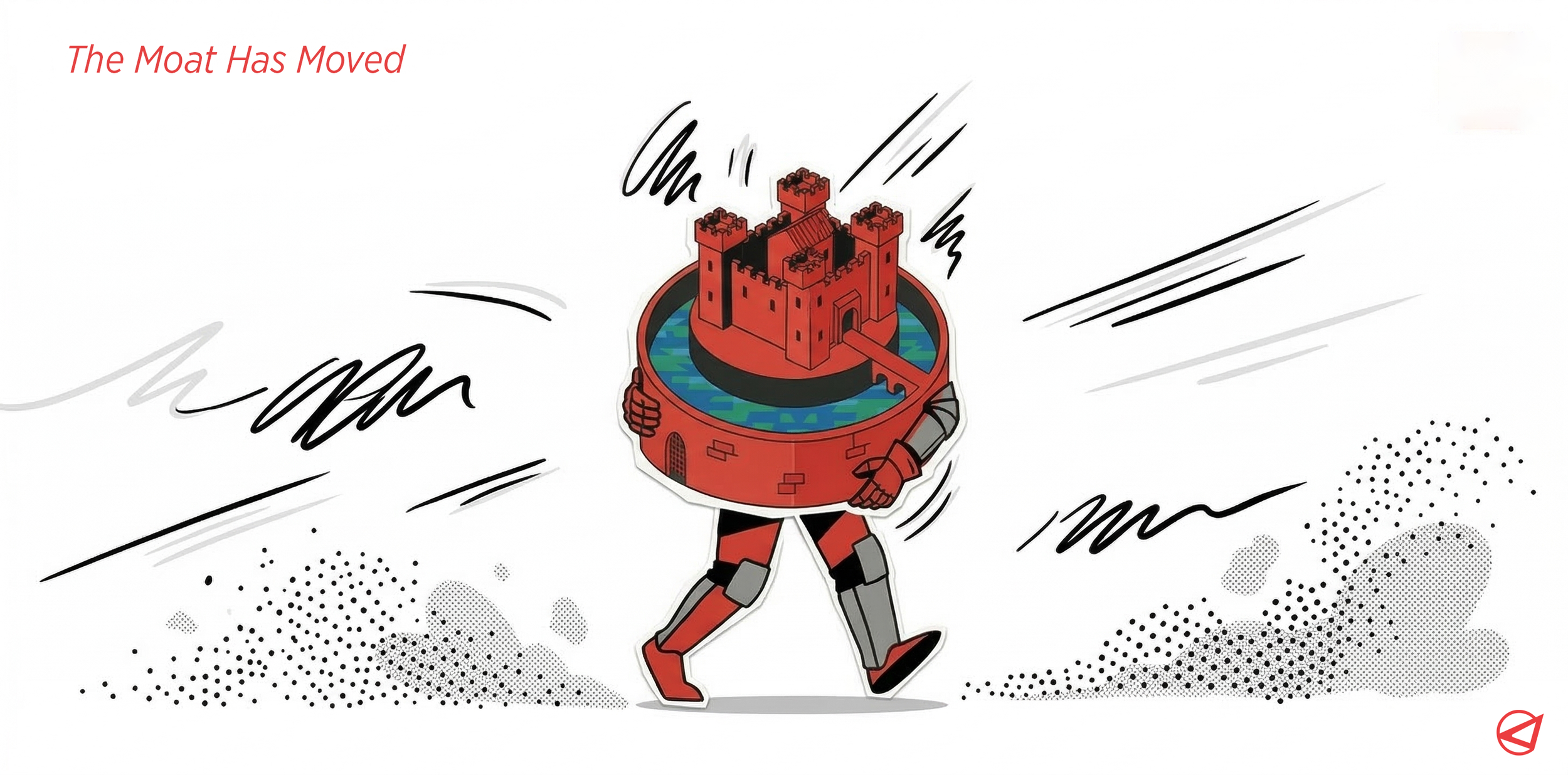
Ideas are no longer scarce, they are the commodity, and the moat has moved. And most companies haven't figured that out yet.
For most of the last century, the company with the best idea won.
Insights were competitive advantage and you protected it, codified it, sometimes trademarked it, resourced it, and grew. The gap between what you knew and what they knew was your moat. Ideas were scarce. Execution was the commodity.
AI has flipped that equation completely.
Now any organization or individual with a large language model can generate ideas by the bushel before lunch. Take your pick, AI has it: Competitive analysis, product concepts, go-to-market frameworks, campaign strategies, content, and code. In the time it used to take a leadership team to align on a problem statement, AI can generate a hundred plausible solutions and rank them by feasibility.
Ideas are no longer scarce, they are the commodity, and the moat has moved. And most companies haven't figured that out yet.
The New Scarcity
I was in a conversation recently about the Yale Innovation Summit. If you haven’t heard of it, now you have. You’ll thank me later because it’s one of the most substantive gatherings in this.
Something dawned on me. The true innovators are the people willing to take chances and implement. Success is less about thinking and more about successfully executing new ideas.
That's it. That's the whole thing.
We, as a society, have been so conditioned to celebrate “The genius” that we've built entire corporate cultures around generating them. You experienced or heard of these happenings headed the direction of the Dodo: Innovation labs, brainstorming offsites, pitch competitions. etc. This kindling was designed to ignite creative thinking, but that’s no longer where the value resides.
With AI doing the conceptual heavy lifting faster and cheaper than any team ever could, the pretense is gone. The winners, at least in AI’s short term, won't be the companies with the best ideas. They'll be the companies with the cultures encouraging people to execute them.
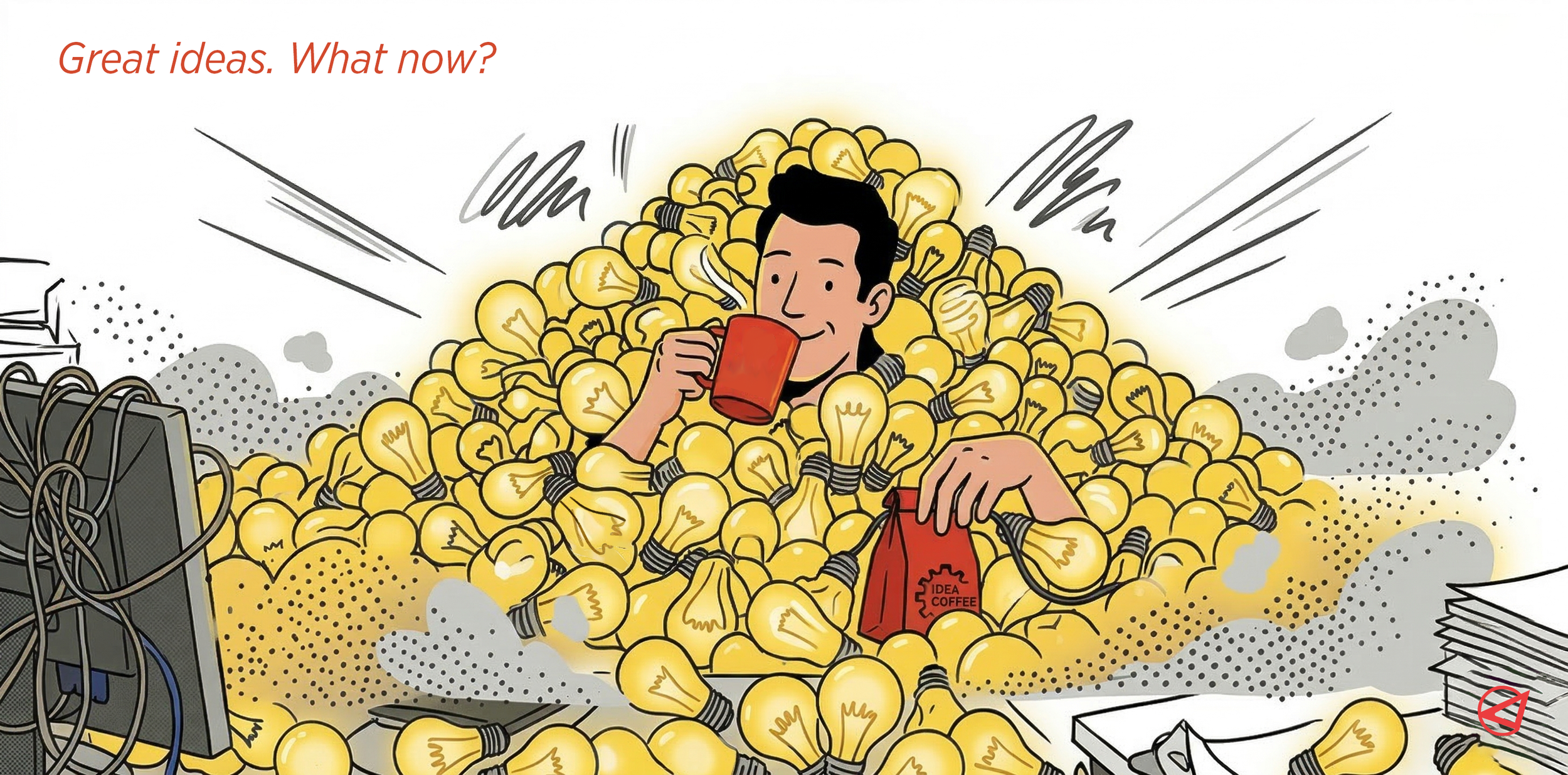
Culture Is the New IP
What does a culture built for execution actually look like? What makes it successful?
It starts with risk tolerance — real risk tolerance, not the kind you put in the values deck. The kind that actually shows up in how decisions get made at the middle layer of an organization. It’s where ideas go to die. Not in the C-suite, where the vision lives. Not on the front line, where the work happens. In the middle, where fear of being wrong is highest and accountability is spread thin.
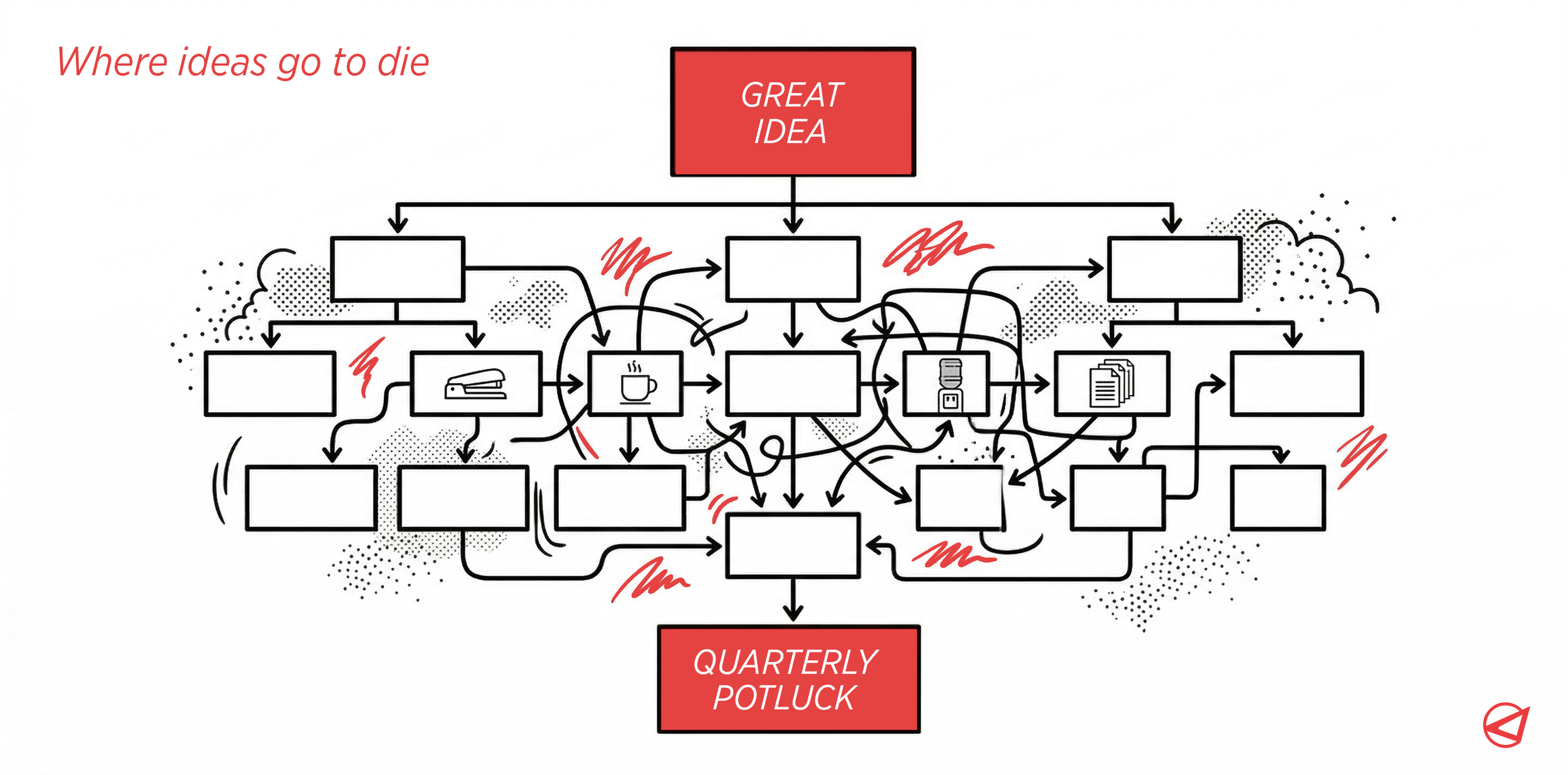
Good cultures exist where leadership removes the penalty for failing fast. Missed attempts get treated as learning opportunities rather than damage taken. Speed gets rewarded over perfection. The people leading the work are trusted to move without waiting for permission they actually don’t need.
Companies that have cracked this share one trait: they’ve made it safer to be wrong than to be slow. That’s not a slogan. It’s intentional — built into how they hire, review, and celebrate.
The second piece is clarity. Execution doesn’t meet its goals or fails altogether not because people lack capability, but because they lack alignment, either with the big idea or with the plan to make it happen. Here’s an example: Everyone is running hard in a slightly different direction. The idea made sense in the room, but by the time everyone reconvenes, it has gone in different directions.
This is where a phrase keeps coming back to me: it’s not always just about what you say. It’s how you say it.
The ability to translate a concept — especially an ambitious, abstract, AI-generated concept — into a directive that a team can actually act on, without losing the intent, is increasingly rare and increasingly valuable. It is, in many ways, the defining skill of the next generation of leaders.
The Premium on Execution
Here’s the uncomfortable truth: the companies that will win aren’t necessarily the most creative.
They’re the most disciplined. They’ll prioritize without remorse because executing every idea is like a buckshot — widespread, but rarely precise. They’ll hold staff accountable to execute concepts, not just come up with them. They’ll measure quality with follow-through just like they’d measure quality with creative ideation.
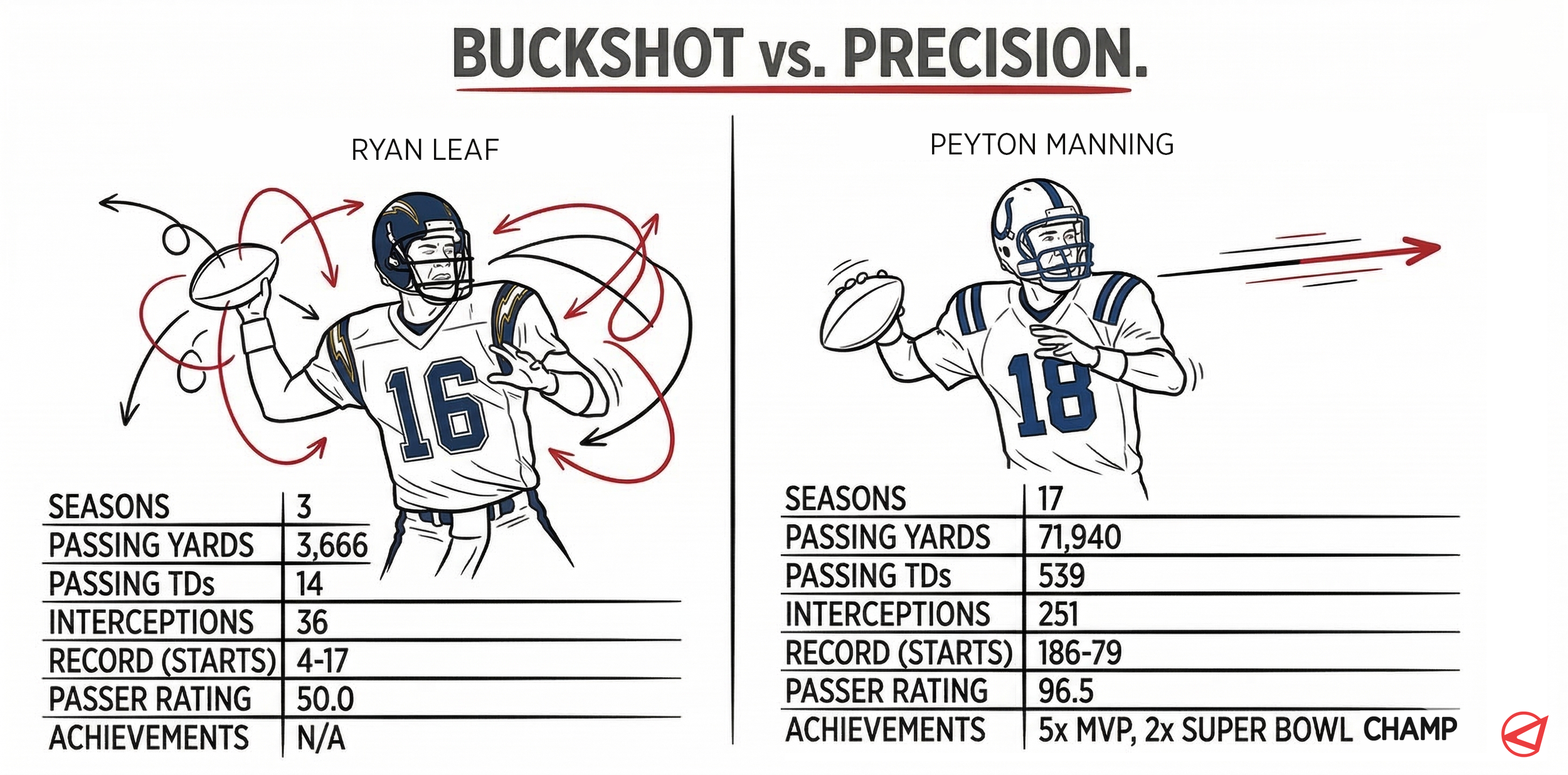
We already see this playing out. The AI companies that are winning aren’t necessarily the ones with the most sophisticated models. They’re the ones who figured out distribution, onboarding, and customer experience faster than everyone else. The idea — the model itself — is almost beside the point. What separated them was how they moved.
This applies everywhere. Two random industry examples include restaurants and non-profits. Restaurants who innovate don’t just have better recipes — they have better systems and better training that create consistency. Nonprofits who grow aren’t always led by the most visionary leaders — they’re led by people who know how to build, put little points on the board quickly, then sustain momentum. The pattern repeats across every sector and every size.
The gap is cultural. The fix is cultural.
What This Means Right Now
If you’re leading or advising an organization of any size, the most important thing you can audit isn’t strategy. It’s culture.
Ask yourself several questions: “When someone brings a good idea here, what actually happens to it?” “How many layers does it have to pass through?” “How many can veto with no accountability for the outcome?” “What is the actual cost of being wrong?” “Does that cost discourage the right people from trying?”
Then ask: “When we commit to something, how good are we at seeing it through?” Don’t assess effort because most teams of four to six people work hard. Assess the clarity of communication, alignment, and follow-through. Did original intent last?
Those answers tell you more about your competitive position than your next brainstorm will.
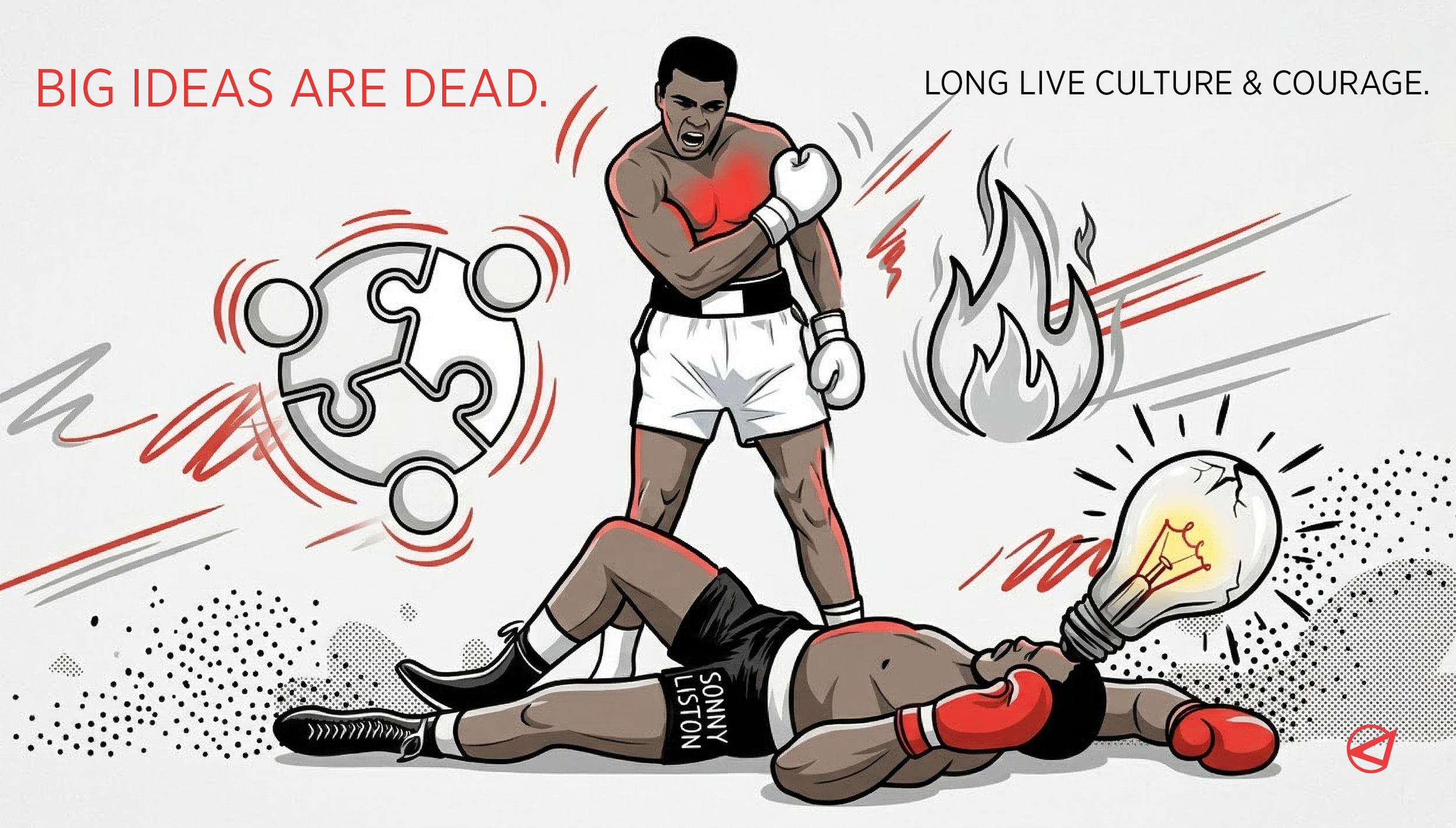
AI killed most celebrated part of the innovation process — the light bulb, the spark, the lightning bolt — and made it cheap, fast, and universally accessible.
What it cannot do is decide to commit and build organizational culture that says, “We are going to move, we are going to move together, and we are going to move well.”
That’s still human work for leaders like us.